
Not necessarily. We’d be a little suspicious of a sensor diagnosis made without anybody putting a gauge on the tires first. Maybe the sensor is worn out. Maybe you’ve got a screw tucked into the tread where you can’t see it. Either way, ordering a part comes later.
There’s also a detail that gets lost in this conversation: not every car has pressure sensors inside its wheels. So before spending money on one, let’s work out what your car actually uses.
Which Kind Of TPMS Is In Your Car?
With a direct system, a small unit inside the wheel measures pressure and sends a signal to the vehicle. Those units can fail, and the sealed batteries don’t last forever. An indirect system does things differently, using wheel-speed information and other data to recognize a change. No in-wheel pressure sensor to buy for that one.
That’s why the year and model matter when you call. “The tire light is on” gets the conversation started, but it doesn’t narrow the repair down very far. If you’ve recently had tires changed or rotated, mention that as well. There may be a relearn or calibration procedure that hasn’t been completed.
First, The Tires
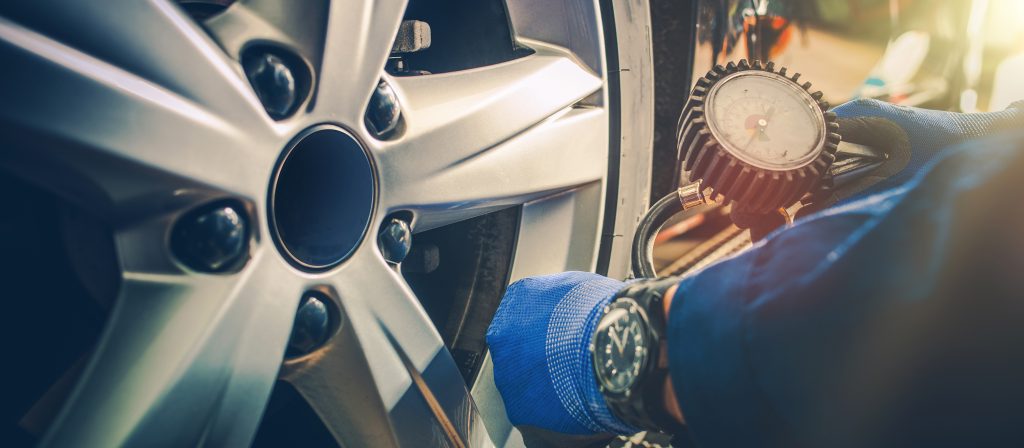
For cold readings, leave the car parked at least three hours and check before driving. The vehicle label, normally in the driver’s door opening, tells you the recommended pressures; look at the front and rear figures rather than assuming they’re identical. The sidewall number belongs to the tire’s rating information. It isn’t the car’s everyday target.
Here’s the part we’d pay attention to afterward: does the same tire need air again? If it does, we’d be looking for a leak. A valve seal, the bead against the wheel, a puncture. Plenty of places for air to get out without the tire looking flat in your driveway.
Cold weather can lower the reading without air leaving at all. And driving warms it back up. Don’t bleed a warm tire down to the cold setting; tomorrow morning it’ll be short. A good gauge reading doesn’t clear a cut or bulge either. Pressure and condition both count.
What About The Flashing?
On many cars the light flashes for roughly a minute, then stays lit when there’s a system fault. Your manual has the pattern for your car. It isn’t a message saying “buy a sensor,” though. A communication or setup problem can produce a warning too, and you can have low pressure at the same time.
Testing the direct-system sensors helps sort that out. A confirmed dead battery or damaged, nonworking unit may call for replacement. A leak at its valve is another question: some designs accept a new seal kit or serviceable stem while the electronics stay. We’d check the design and damage before condemning the assembly.
Don’t Drive On A Guess
If a tire is seriously low, damaged, or dropping air quickly, stop safely and get assistance. The same goes for abnormal handling. Don’t drive around hoping the light will reset; a tire run low may have damage you can’t see.
For a warning that needs sorting out, give us a call at (479) 927-3604. We’re Accurate Total Auto Care in Springdale, AR. Tell us what the light does and what you’ve checked, and we’ll help you decide on the next inspection step. No need to arrive with a sensor already ordered.